Venture Sharks

Last week, my company CompassioNote competed in the semifinal round of Venture Sharks.Venture Sharks

We went up against eight other teams, and the top four of those teams (including us, yay!) were chosen to move on to the final round.

Venture Sharks

Venture Capital sponsors the annual Venture Sharks contest in which teams of entrepreneurs pitch their ideas to a panel of judges.

Teams get four minutes to pitch their idea/service/product, and another four minutes to answer questions from the judges.

Each year, there are ten semifinalists chosen from among the fifty or so applicants.

The winner of Startup Weekend (one month beforehand) is automatically accepted as the eleventh entry. That’s how we got involved.

Two of the other ten selected entries had to drop out, so there were only nine teams instead of eleven.

May 4 is also Star Wars day. ‘May the Fourth’ be with you.

The Finalists

These four teams advance to the finals, on May 4th:

  • CompassioNote: That’s us! Aaron Priced pitched our service that compares our customers’ contacts to life events like new homes, new jobs, marriages, and deaths.
  • Farm Specific Technology: Austin Scott invented a flex-roller crimper to make it easier and faster for farmers to remove cover crops and replant cash crops.
  • Switcher Studio: Nick Mattingly (no relation) and his team developed an app/service to make video and sound editing easier and faster. Works on Apple products, and costs roughly $50 a month.
  • Uncrash: Trenton Johnson wrote an app to help body shops and garages with their workflow and customer communication.

Our judges were Alli Truttman (Wicked Sheets), Tendai Charasika (SuperFanU), and Ross Jordan (Yearling Fund).

CompassioNoteCompassioNote

So who the heck are these guys, and what do they do, anyway?

You can watch this video of our final pitch at Startup Weekend, but even though our company was only one month old by that time, our idea had already matured. (The same can’t necessarily be said of our personal maturity level.)

The one-liner:

  • CompassioNote helps companies have better relationships with their customers by using personalized data.

What that means:

  • CompassioNote compares your list of contacts against several sources for life events so you’re notified when something of interest happens to the people you know.

What that does:

  • It gives you a reason (and a time) to reach out to people that you mostly know, but not all that well, to establish or strengthen that personal bond.

Who this helps:

  • People who raise funds (museum supports, alumni, political campaigns, etc.) can keep up with their important donors.
  • People who sell supplies or services can keep up with their contacts at major clients.
  • People who have a lot of friends and acquaintances don’t have to let those casual relationships fade.

“Being human is good business.”

In essence:

  • We add the human touch back into the processes that automated systems have rendered obsolete, or at least invisible.

The New Stuff

At the semifinals, we announced our integration with Salesforce and Microsoft Dynamics, and our partnership with KiZan Technologies on both the development and sales channel fronts.

Your Next Move

If you’d like to find out more about what we do, or become a customer, or refer a customer, sign up for our mailing list and let us know what specifically interests you.

If you’d like to cheer us on at the Venture Sharks finals, register for the luncheon.

If you’d like to help us spread the word, tell your friends about us on LinkedIn and Twitter.

 

Cool Job: NASA

Challenger

Oh, the humanity!

I’ve done a lot of things for a living over the years, and one of my first was also one of the coolest.

Cool Job, Part 1: NASA

On 1/28/86, the space shuttle Challenger blew up.

Later that year, I got a call from NASA with a job offer, which I accepted. Over the phone. They didn’t realize I had an orange mohawk. I was still a teenager, after all. Ya gotta live.

A few months after that, I moved down to Florida to work at Kennedy Space Center, where I worked in the Mission Planning Office and helped write the software that scheduled shuttle launches, landings, and maintenance.

NASA's Trailer Park

Capt. Kirk: “No, I’m from Iowa. I only work in outer space.”

I got a haircut before starting, and looked like a real person. But before long, I was back to my old cranial tricks.

My office is visible in all of the footage used in the movies. That one giant building that’s always shown is the VAB – the Vehicle Assembly Building. It’s the mechanic’s garage where the shuttle goes for its oil changes and other maintenance.

My job was actually in NASA’s “Trailer Park.” There were some old railroad cars pushed together sideways with the open sliding doors lined up, making a large single office with branching rooms, sort of. It was a cheap way to use old equipment to make something new-ish. It was air-conditioned, carpeted, and otherwise very nice inside, but I found it amusing that it was practically made of garbage.

When we went back into space the following year, I got to stand on my office rooftop to watch the launch. The vibrations shook my whole body. It was amazing.

I didn’t like Florida, so once we got back into space, I considered my work done, and I moved a thousand miles north so I could do some other nifty tech stuff instead. More on that in my next cool job installment.

Space Shuttle

The stars look very different today.

But writing space shuttle software for NASA as a teenager is certainly a powerful feather in anyone’s geek cred hat.

Go on to Part 2: Wolf3D

Life in the Clouds

Here is my year, presented in word cloud format from my three feeds.

There’s a lot of overlap, as you’d expect, but each platform presents its own slice of my life.

Blog

Blog Wordle 2015

Twitter

Twitter Wordle 2015

Facebook

Facebook Wordle 2015

Master Data

Master Data Management (MDM) is a way of keeping your data accurate.

I’ve spoken about MDM at companies, technology groups, business groups, database groups, conferences, college classes, and more.

Here’s the general overview that I typically give (download the PowerPoint file).

Overview

“Too much information is driving me insane.” (Too Much Information, The Police, 1981)

“Two men say they’re Jesus. One of them must be wrong.” (Industrial Disease, Dire Straits, 1982)

“A man with one watch always knows what time it is. A man with two watches is never sure.” (San Diego Union, Lee Segall, 9/30/1930)

To master your data, take these steps:

  • look at each record of incoming data
  • standardize the formatting (phone numbers, addresses, etc.)
  • validate that it is allowable in your system (sure, 1/1/1900 is a real birthdate, but is it really the date that you made a sale?)
  • have a human being look through the edge cases (this John Smith might be the same as that other John Smith)
  • integrate the good/new/updated record into your master
  • communicate the update/entry to any systems that are interested

Benefits

When this is done, it opens up many possibilities for improvement.

When you know that your data is correct, you can:

  • govern it (lock down who can add/change data, and make it adhere to your own rules)
  • synchronize it (keep all your systems in tune with each other)
  • centralize it (set up a single master ID that keeps pointers to other systems and IDs)
  • log it (see how and when data changed, and which system and person did it)
  • analyze it (for meaningful results)
  • mine it (for unexpected insights)
  • act on it (make faster and better decisions)
  • enrich it (roll in data from outside sources like the Better Business Bureau, US Census Bureau, and others)
  • adapt it (if you acquire a new company, merging their data with your becomes much more manageable)
  • scale it (if you need to process 100x more information, it becomes a matter of adding new hardware as needed)

Horizon

Once it’s all running smoothly, you could also:

  • improve retention by finding existing customers who feel ignored
  • prevent fraud by comparing new data with old, according to patterns that you expect
  • minimize returned mail and packages by ensuring that addresses are accurate
  • identify your best customers (least effort, most profit = cash cows) and keep them happier
  • find mismatched data (do John Sr, John Jr, and John III all live at the same address? separate them)
  • absorb new sources and new types of data easily
  • stop wasting time with yoyos (customers who come and go and come and go)
  • find the key influencers in your network of customers and leads
  • grab the low-hanging fruit (least effort, big payoff)

Download the slides here

Events and Comradery

Many organizations have get-togethers in December. It’s a good chance to catch up with friends and colleagues, and find new connections.

If you’re in the Louisville area, here are some of the social gatherings that I’m quite likely to attend.

And here are some more focused events.

And shopping/entertainment opportunities.

You can keep up with all the events I’m part of or interested in on my calendar.


Health Tech

Thursday was the annual XlterateHealth’s Demo Day. The healthcare startups involved all showed off their latest and greatest ideas and achievements. I love checking out the new ideas that inventors and creators come up with.

Here are the companies that were there showing their wares:

Digital

  • iClinical is an app for trial clinicians to collect, analyze, and display realtime test results, saving months of time in the research process. Also, since the data is pulled in as it happens, they can quickly respond to changes. Imagine that during the trial, they find out that someone with a certain condition or taking a certain drug has died. The clinicians could send out an instant alert to others in the same metaphorical boat to have them stop the test and seek help.
  • Trajectory is a data analysis tool that studies lots of patients who have had a similar health occurrence (stroke, heart attack, etc.), and finds similarities before and after. This helps to identify accurate warning signs and the most effect treatment.
  • SYSGenomics uses molecular diagnostic tests to predict which type of cancer treatment is likely to be the most effective for any given cancer patient.
  • MedUX combines a video display and a sterile wireless joystick so that doctors can access medical systems even after they’ve scrubbed up.

Physical

  • Inscope invented a laryngoscope (the tube that doctors use to intuabte your airways) that is wifi enabled with an onboard video feed. That makes it easier and safer for the tubes to go into the right place without scraping or bruising the throat as it goes.
  • NormaLyte created a drink mix that reverses the effect of dehydration. This is also great for relief efforts in areas where water is rare or tainted, by helping people’s bodies get more use out of the water that they do drink.
  • iPillbox is a pill organizer that let doctors and caregivers monitor whether or not their patients have taken their medicines. Imagine that your parents are aging and taking many types of medications at different frequencies throughout the day; this could alert you that they missed their lunchtime pills.

This year, the event was held at the Play Dance Bar, which I hadn’t been to yet. (Me not frequenting dance clubs; go figure.) The place was decorated for Halloween. Very nicely done, too.

Here’s the Business First article about the event.

Thursday was also the “Data! Fostering Health Innovation in Kentucky and Ohio 2015” event, that I didn’t hear about early enough to get involved with. But a friend who went told me that even thought “data” was the first word in the event, it was mostly Department of Health officials talking about policy. Bullet dodged.

Can't Sleep, Clowns Will Eat Me Oh What a Feeling, Monsters on the Ceiling I See Dead People


Robots

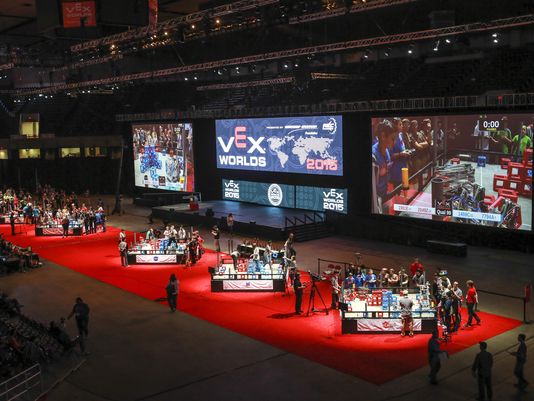
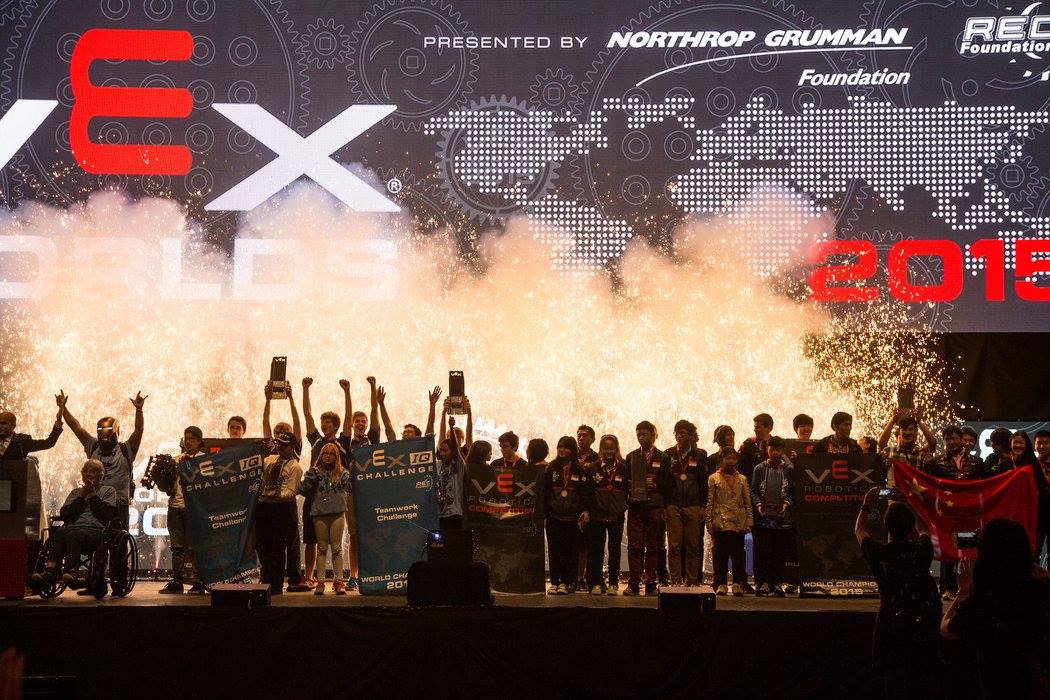
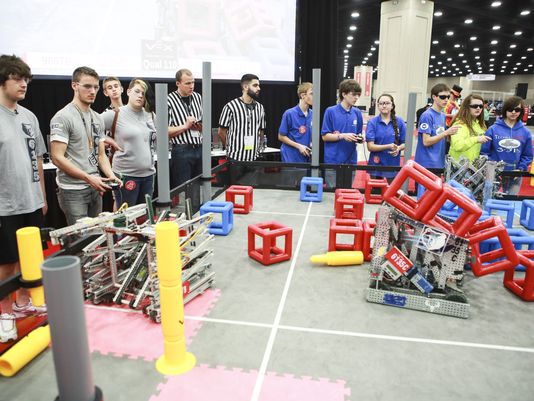
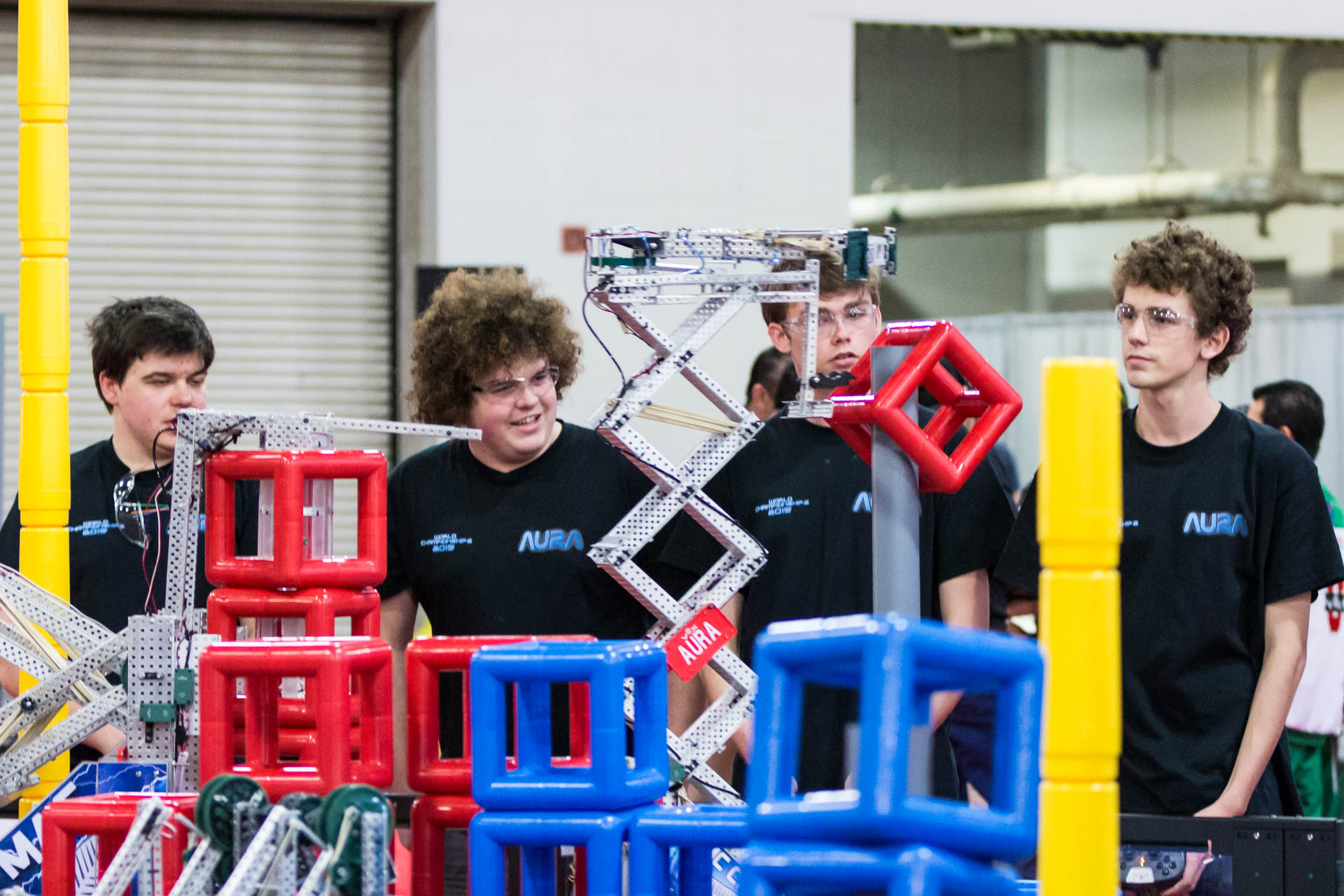
The REC Foundation (Robotics Education and Competition Foundation) hosts the VEX Robotics Competition each year. This is a competition for middle schoolers, high schoolers, and collegians. The worldwide championship came to Louisville in 2015, and will stay here for at least four more years. That’s a whole lotta flights, hotels, restaurants, and shuttling — about $5 Million worth.

At this year’s event, I volunteered for all four days of the event (Wednesday through Saturday). I was at the registration table for the first two days, which was an amazing experience. With over 800 teams from around the world, there were volunteers at the desk who could speak Portuguese, Mandarin, and a host of other languages. Each team had several students, plus their coaches, meaning that there were roughly 10,000 participants all told. For the next two days, I manned (i.e. “commandeered”) the booth for FirstBuild. They were one of the event sponsors, but didn’t realize that they’d also be getting a booth out of the deal. Since the booth would have been empty otherwise (which would disappoint me), and since I had a FirstBuild t-shirt, I sat at the booth and told people what FirstBuild is, how it came to be, what they do, and how jealous they should be because they haven’t been there yet.

The event is huge. It takes over the entire Fairgrounds and Expo Center — all four wings, and both stadiums.

You can volunteer here. (You don’t have to commit for the entire event like I did.) You don’t need to know anything about robots — they need all sorts of volunteers: registration, coordination, setup, scoring, etc. Kids can also help out, so this is a great family activity.

This week, the REC met with the Convention and Visitors Bureau, and dozens of leaders from business, technology, government, and education. (And somehow, also me.) They let us know some pretty cool things:
• the State Championship might be happening at U of L
• NASA has given them a grant to get at least one robot into every school in the county
• they’ll be offering “combo” exhibitor space in a Louisville Showcase for local business and tech, to make the sponsorship rates more affordable
• the event will once again coincide with the Thunder Over Louisville celebration
• they’ll once again rent out the entire Kentucky Kingdom amusement park for the kids Saturday night
• there are many scholarships for entry, including one from U of L

Here are some other cool robotic groups around town, if you’d like to find out more or get involved:
• The U of L Robotics Team
• The U of L Engineering Outreach
Advanced Solutions
DUG, the Drone Users Group
• The First Robotics competition

VEX Championship Arenas Rock Star Kids Robots in the Arena Robot Teams Nothin' But NetAww, He's So Cute

Startup Weekend

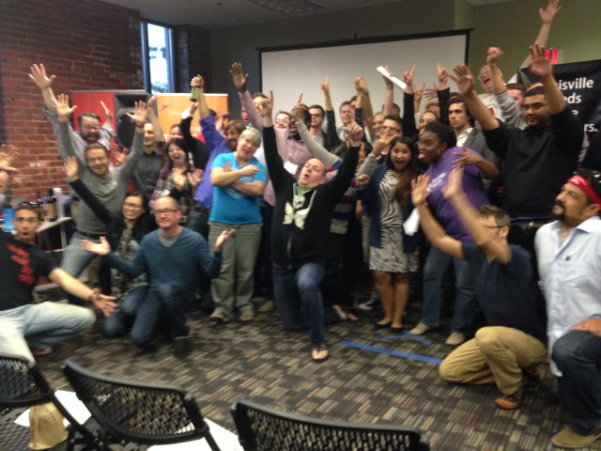
Louisville’s seventh Startup Weekend was October 9-11, 2015. The event gives participants the chance to pitch ideas to each other, form teams, research their topic, speak with customers, create a thing (a gadget, an app, a website, a process, etc.), and present their findings before a panel of judges. Eight teams made it to the Sunday evening judging rounds.

This was the first time that the first, second, and third-place teams were all led by women.

Third place went to artiFACTS, led by artist/photographer/designer/coder Lea Ingold. The artiFACTS phone app will make it faster and easier to ship artwork or other valuables that need their conditions to be photographed and documented vigorously along the way.

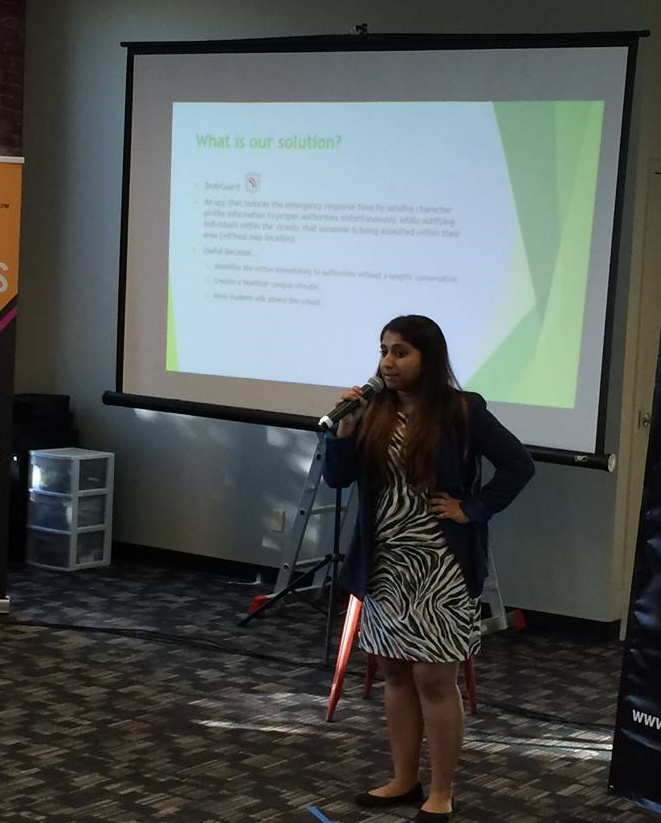
Second place went to Bodyguard, led by Berea College student Raunak Thakur. Bodyguard is a phone app that will silently alert campus police and up to five friends in case of danger. It can optionally sound an alert and flash the camera light.

First place went to Foodinary, led by high school student Abigail Griggs.

I’ll say that again — led by high school student Abigail Griggs.

Foodinary is a phone app that will explain the ingredients on food labels in plain language, including how it is likely to affect our bodies. Each user could set up a list of food allergies, dietary restrictions, religious prohibitions, and other “food no-nos” to get alerted before eating something they shouldn’t.

Future enhancements to Foodinary could include logging nutrition intake, searching for foods that will affect our bodies in the particular way we want, image recognition for prepared food (“This looks looks like a plate of fettuccine alfredo, is that correct?”), user feedback and community interaction, and more.

I love being a part of Startup Weekend. It’s a chance to meet new people, hear new ideas, unite for a common cause, explore new processes and technologies, spend time with excited entrepreneurs, learn from experienced business mentors — in short — to get out of our own comfort zones.

To find out more about events like this, check out:
Louisville Startup Weekend
Lean Startup Circle
Open Coffee

There are a number of coworking spaces and business incubators:
iHub
The Park at Shelby
Velocity
Mid-America Science Park (Sellersburg)
XlerateHealth
MetaCyte
ChefSpace

Read through the marvelous summaries from these experts:
• Greg Langdon’s summary of Louisville Startup Resources
• Vik Chada’s Mind Map of Louisville Startup Resources

And find an association or two to meet people in your field.
Some of the groups I’m involved in are:
Technology Association of Louisville Kentucky (TALK)
SQL Louisville
Civic Data Alliance
.NET Meetup
Society for Technical Communication
Louisville Digital Association
Keep Louisville Weird
Improv Comedy Workshop
Louisville Mastermind
No Rules Networking
…and plenty more. Find your own ways to get involved.

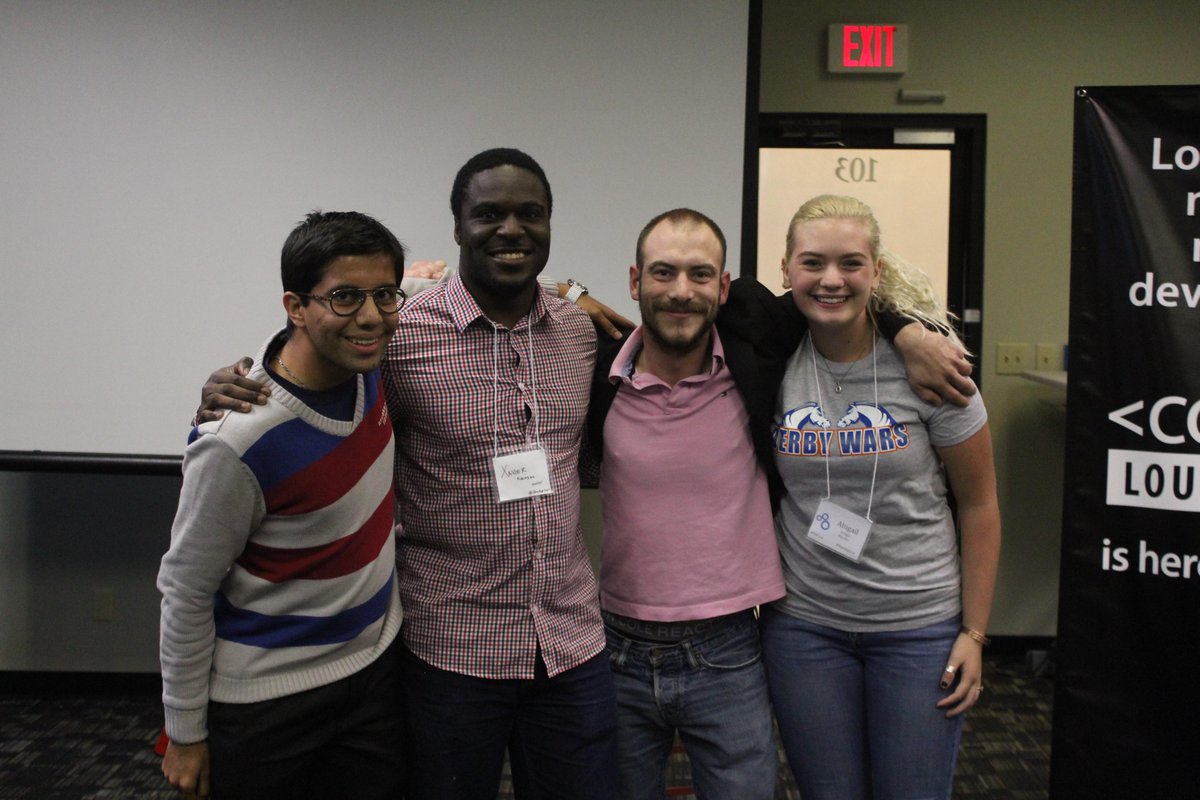
Startup Weekend Group Shot
Startup Weekend Louisville, #SWLou


Louisville Technology

The Lane Report put out a great article about Louisville technology, in which Susan Gosselin covered many aspects of the local tech scene:
TechFest, Louisville’s recent conference combining biotech, hardware, software, and emerging tech
TALK, Louisville’s technology council
Google Fiber announcing Louisville as its fourth city
• The Louisville Digital Association
TechTown, the makerspace + creative studio for kids
• government support (Economic Development, KY Innovation Network, grant matching)
• makers (LVL1)
• coders (Code Louisville, Cocoaheads)
• accelerators/incubators (iHub)
• local tech companies (Silica Nexus, RedeApp, Deyta, Stonestreet One, Indatus, and more)
• events (Startup Weekend, CIO Practicum, XR Festival)

She covers even more in her article, but it would take a hundred times as much space to mention our other cool tech companies, opportunities, events, and talent in Louisville. Healthcare/biotech, robotics, STEM, security, innovation, manufacturing, data, and many other elements come together to make the tech sector an “exploding area of development.”

If you want to keep up with what I’m doing regarding technology in the city, keep an eye on my calendar, and follow me on Twitter.

Louisville Technology

Career Planning

This morning, I spoke for the ladies at Dress For Success about finding and getting the right career.

Desiree Thayer, who sits with me on the board of TALK (the Technology Association of Louisville Kentucky), invited me. Besides being a techie and business leader, Desiree is also the singer for Front Porch Prophets and founder of the recording label Earthtone Analog Recording Company.

My own career has been an odd one, including space shuttling, virtualizing, radioing, graphic designing, writing, publishing, preaching, teaching, programming, databasing, conferencing, scrumming, gaming, hacking, and more. My degree in engineering math and computer science was counterbalanced by minors in psychology and philosophy; I like using both halves of my brain.

Here’s the career advice cheat sheet that I gave to my students, and a sample of my own resume.

In short:
• know yourself
• know your community
• know your company
• know how to approach

Dress For Success Louisville